
Investors today are looking for the best investment strategy for 2025 to grow their capital. Two often used approaches are PAMM and Copy Trading. Expert traders' expertise helps experienced investors and offers investment strategies for beginners. PAMM combines funds into a single account controlled entirely by a professional trader. Investors may mimic transactions in real time with Copy Trading while still maintaining control over their finances.
Every approach has particular advantages, drawbacks, and costs. Knowing the differences will enable investors to make better judgments. Elements including control, risk tolerance, openness, flexibility, and expenses should guide the choice. Success depends on selecting the best approach, whether you want a hands-off approach or more engaged participation. This guide covers both techniques and how to choose the one best aligned with your financial objectives.
What exactly is PAMM?
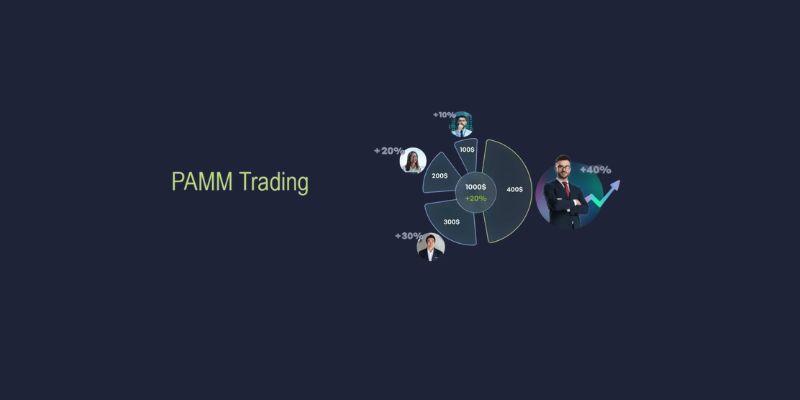
PAMM is the acronym for the Percentage Allocation Management Module. It is a pooled investment fund. Investors give money to a trader for a single account. The trader makes trade and investment decisions. Profits and losses are distributed according to each investor's contribution. PAMM enables novices to gain from the knowledge and experience of seasoned traders. It is perfect for those who would rather not trade themselves. Investors have to believe the trader's actions.
The investor's daily control is quite limited. Usually, accounts pay fees based on their earnings. Certain records can additionally show management or service costs. Though risk relies on trader performance, strong returns are achievable. For those seeking passive income investment strategies, PAMM is straightforward for long-term investors. Withdrawals might take time since the pooled fund structure is complex. It fits patient investors looking for hands-off trading success all around.
What is Copy Trading?
Copy Trading lets investors follow the moves of seasoned traders. Investors link their accounts to those of a skilled trader. Every trade the trader executes is instantly copied. It ensures investors may benefit without having to master complex techniques. Copy Trading is transparent, as all trades become apparent right away. Investors are free to change trades or stop copying them whenever they like. Unlike PAMM, investors always have complete control over their money.
Platforms frequently rank traders according to their prior performance and risk profile. Copy Trading lets one diversify by following several traders at once. It is perfect for people who wish to be actively involved in trading. Charges vary according to the platforms or particular traders copied. By observing professional trades, investors can progressively acquire techniques. For all expertise levels, copy Trading offers flexibility, education, and perhaps riches.

Key Differences Between PAMM and Copy Trading
Here are the main differences between PAMM and Copy Trading that highlight control, risk, flexibility, transparency, and overall costs.
Control
Professional traders manage all investment choices in PAMM accounts. Investors are not allowed to influence tactics or everyday transactions. For profits and risk control, they have to rely entirely on the trader. Investors have more control over their accounts, so copy trading differs. At any time, they have the power to stop, start, or modify copied trades. This adaptability offers more individual control over risk exposure and cash.
Risk Management
PAMM accounts turn fully on the aptitude and approach of the trader. Bad judgments made by the trader affect every investor. Individual risk adjustment has only a few possibilities. Investors may proactively control risk through copy trading. They can replicate several traders and spread their portfolio. It lowers reliance on the performance of a single trader and distributes possible losses. Risk is now more manageable and controllable.
Transparency
PAMM accounts usually offer little insight into trading activities or decisions. Investors could not know the specific approach driving every deal. Trades are immediately apparent in Copy Trading, hence it is open. Investors may follow the trader's every action and evaluate performance indicators. This clarity enables investors to make wise choices regarding continuing, stopping, or modifying copied trades.
Flexibility
PAMM investors must adhere to the trader's plan and timetable. Withdrawals and account changes could take time since pooled funds are involved. Copy Trading gives investors who desire active participation more freedom. Investors have the freedom to stop copying trades, change their funds, add or remove traders, or take any other action they desire. This flexibility enables improved control over investments based on personal objectives or market circumstances.
Fees and Profits
PAMM accounts can charge performance fees and administration fees on any earnings. This arrangement encourages traders but lowers investor net returns. Depending on the trader or platform, Copy Trading may demand platform commissions or subscription rates. Profits precisely reflect the copied trader's success. Investors can change tactics or traders to maximize returns while more closely controlling costs.
How to Choose the Best Investment Strategy
Selecting the best investment plan calls for thorough knowledge and preparation. Before you do anything, make sure your financial goals are well-defined. Determine how much risk you want to accept. Evaluate your expertise and experience in investing or Trading. Think about the degree of control you wish for on your assets. Assess the track record of managers or traders you intend to emulate. Verify the transparency and accessibility of real-time performance information. Before investing, thoroughly examine costs, commissions, and withdrawal policies.
Start by using a little bit to see if your plan works. Check results often to ensure uniform performance throughout. Diversifying across different accounts or traders can reduce potential losses. Keep calm and orderly, eschewing thoughtless choices. Examine plans periodically to adapt to variations in the economy. These stages ensure wiser, safer investment decisions that support your objectives effectively.
Conclusion:
Whether you should use PAMM or Copy Trading will depend on your risk tolerance and objectives. Investors looking for a hands-off, completely controlled experience would find PAMM appropriate. For individuals wishing for flexibility and control over their trades, copy trading is most effective. While either plan can produce good returns, knowing costs, trader performance, and openness is essential. Start modestly to try either approach and progressively increase your investment. Diversification among several accounts or traders can lower risks even more. By taking into account your tastes, trading experience, and financial objectives, you can choose wisely.